
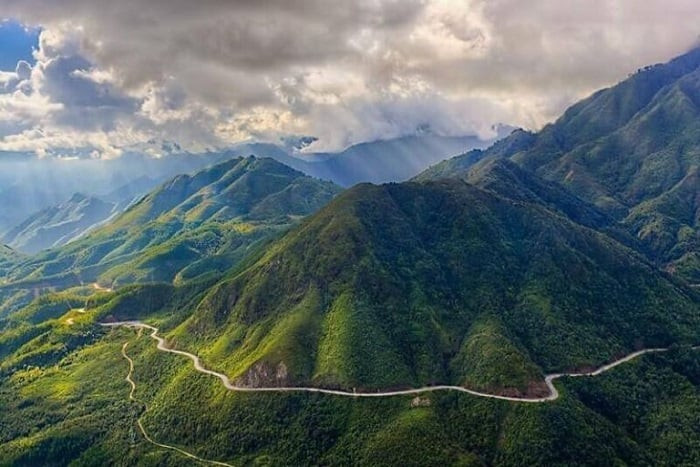
Winding through the majestic Hoang Lien Son mountain range in northwestern Vietnam, O Quy Ho Pass (also known as Tram Ton Pass) stands as one of Southeast Asia's most spectacular mountain roads. Connecting the provinces of Lao Cai and Lai Chau at an elevation of approximately 2,000 meters above sea level, this engineering marvel offers travelers not just a route between destinations, but an unforgettable journey through some of Vietnam's most dramatic landscapes.
The Geographic Marvel
O Quy Ho Pass stretches approximately 50 kilometers between the tourist town of Sapa and the town of Tam Duong in Lai Chau province. As the highest mountain pass in Vietnam, it cuts through the southwestern edge of the Hoang Lien Son range, which includes Mount Fansipan—Indochina's highest peak at 3,143 meters. This strategic position makes the pass not just a transportation route but a natural boundary between distinctly different climate zones.
The eastern side of the pass, facing Sapa, receives a different weather pattern than the western side facing Lai Chau. This geographical peculiarity creates one of O Quy Ho's most famous phenomena: travelers can sometimes experience rain or mist on one side of the pass while enjoying sunshine just minutes away on the other side. This dramatic weather divide has earned the route its poetic Vietnamese nickname: "The Road to Heaven."
A History Carved into Mountains
The pass has a rich history dating back centuries when it served as a challenging trail for traders and ethnic minority groups moving between regions. Its modern incarnation began during the French colonial period when engineers constructed a rudimentary road to improve access to the hill station of Sapa, which the French had developed as a retreat from the lowland heat.
Major development occurred in the mid-20th century, but the road remained notoriously dangerous until the early 2000s when substantial improvements transformed it into the modern highway visible today. Despite these improvements, O Quy Ho remains a challenging drive, with sharp turns, occasional landslides during rainy seasons, and stretches where the road clings to steep mountainsides with dramatic drops just meters away.
Natural Wonders Along the Route
The journey through O Quy Ho Pass offers a constantly changing panorama of natural beauty. Beginning from the Sapa side, the road climbs through terraced rice fields characteristic of northern Vietnam before entering dense mountain forests. As elevation increases, vegetation changes noticeably, with subtropical species giving way to temperate and eventually alpine flora at the highest sections.
The Silver Waterfall (Thac Bac) marks one of the pass's most popular stops, where water cascades 200 meters down the mountainside in a spectacular display visible from the roadway. This natural attraction draws visitors year-round but becomes particularly magnificent during rainy seasons when the waterfall roars with impressive force.
Near the summit, the aptly named "Heaven's Gate" viewpoint provides the pass's signature vista. From this vantage point on clear days, visitors can see the undulating ridges of the Hoang Lien Son range extending toward the horizon, while in the valleys below, clouds often form a mesmerizing "sea of clouds" effect particularly famous at sunrise. This phenomenon—where mountain peaks appear to float above a blanket of white clouds—has made O Quy Ho a favorite destination for photographers.
The "Cloud Hunter's" Paradise
O Quy Ho Pass has earned fame among Vietnamese travelers as the premier destination for "săn mây" or "cloud hunting"—the increasingly popular activity of seeking perfect vantage points to witness the sea of clouds phenomenon. The pass's particular geography and climate conditions make it one of Vietnam's most reliable locations for this ethereal display.
The best times for cloud hunting typically occur in early mornings between 5:00 and 7:00 AM, particularly during seasonal transitions in spring and autumn. During these periods, temperature differences between night and day create ideal conditions for low-lying cloud formation in the valleys. Dedicated photographers often spend nights near the pass to capture the magical moments when dawn light transforms the clouds into golden or pink-hued oceans surrounding island-like mountain peaks.
While the sea of clouds remains the most famous atmospheric phenomenon, O Quy Ho offers other weather spectacles. During winter months (December-February), the pass occasionally receives frost or even light snow at its highest sections—a rare sight in Vietnam that draws domestic tourists eager to experience wintry conditions rarely seen elsewhere in the country.
Cultural Encounters Along the Journey
Beyond natural wonders, O Quy Ho Pass serves as a pathway through diverse cultural territories. The eastern approach from Sapa passes through areas predominantly inhabited by H'mong and Red Dao ethnic minority communities, whose distinctive indigo clothing and terraced farming techniques have become iconic images of northern Vietnam.
On the western side toward Lai Chau, the cultural landscape transitions to areas where Thai and Lu ethnic groups maintain their unique traditions. This cultural gradient makes the pass not just a physical journey but a transition between different cultural zones, architectural styles, agricultural practices, and culinary traditions.
Small roadside markets occasionally appear along the route, particularly on weekends, offering local products from both sides of the mountains. These impromptu gatherings provide opportunities to purchase distinctive handicrafts or sample regional specialties from different ethnic groups while supporting local economies.
Culinary Stops: Mountain Flavors
The pass has developed its own culinary identity, with several distinctive eateries catering to travelers. Small restaurants and cafes at key viewpoints offer local specialties including thắng cố (a traditional Highland stew), grilled meats, and mountain vegetable soups that incorporate wild ingredients foraged from the surrounding forests.
One particular delicacy associated with the pass is cá hồi (salmon) farmed in the cool mountain streams of the region. Several roadside restaurants specialize in fresh salmon dishes, providing a distinctive dining experience at elevations where one would rarely expect to find such fare.
Coffee enthusiasts find the pass particularly rewarding as several scenic cafes have developed along strategic viewpoints, offering the opportunity to sip Vietnam's famous coffee while gazing across misty mountain panoramas. These establishments have become destinations in themselves, with many travelers planning their journeys to include coffee breaks at these dramatically situated venues.
Practical Considerations for Travelers
Navigating O Quy Ho Pass requires preparation and caution. The 50-kilometer journey typically takes 1.5 to 2 hours of driving time, though most travelers allocate substantially more time to stop at viewpoints, waterfalls, and other attractions along the route.
Weather conditions significantly impact both safety and scenic quality. While clear days offer spectacular vistas, they're not guaranteed even in dry seasons. Fog can descend rapidly, reducing visibility dramatically. During the rainy season (particularly July-August), increased risk of rockslides and road damage requires extra caution.
Most foreign visitors experience the pass as part of organized tours from Sapa, with professional drivers familiar with the road's challenges. For those self-driving, rental motorbikes are available in Sapa, though experience with mountain roads is strongly recommended. Larger vehicles navigate the pass daily, with regular bus services connecting Sapa to Lai Chau and points beyond.
Beyond Transit: Activities Along the Pass
O Quy Ho has evolved from a mere transportation route into a destination offering various activities:
Trekking opportunities abound near the pass, with trails leading from the roadway into surrounding forests and toward nearby peaks. Short hikes to scenic viewpoints have been developed specifically for travelers without extensive trekking experience.
Paragliding has emerged as an adrenaline-pumping option, with several operators now offering tandem flights that launch from high points along the pass. These flights provide an extraordinary bird's-eye perspective of the mountain landscape that even the best roadside viewpoints cannot match.
Botanical interests are served by the diverse plant life visible along the elevation gradient. The region hosts numerous endemic species, and sections of the pass traverse through areas particularly rich in orchids, rhododendrons, and medicinal plants used in traditional ethnic minority healing practices.
Overnight experiences are increasingly popular, with some travelers choosing to stay in accommodations near the summit to maximize chances of witnessing dawn's sea of clouds. Several small hotels and homestay operations have developed specifically to serve this growing segment of cloud-hunting enthusiasts.
Environmental and Development Considerations
The increasing popularity of O Quy Ho Pass has brought both economic opportunities and environmental challenges. Tourism development has created employment for local communities but also increased pressure on fragile mountain ecosystems.
Conservation efforts focus on balancing accessibility with preservation. Several sections of pristine forest adjacent to the pass have received protected status, while development of viewpoints and facilities increasingly incorporates sustainable design principles and waste management practices to minimize environmental impact.
Climate change has brought noticeable effects to the pass in recent years, with longtime residents and regular visitors reporting changes in cloud formation patterns, precipitation timing, and forest composition on the mountainsides. These changes have sparked increased environmental awareness among both visitors and communities connected to the pass.
Seasonal Variations: When to Visit
Each season transforms O Quy Ho Pass, offering distinctly different experiences:
Spring (February-April) brings wildflowers to mountain meadows and comfortable temperatures. Cherry blossoms and peach blossoms create photogenic landscapes, particularly in March. Morning cloud formations occur frequently, making this a prime season for cloud hunting.
Summer (May-August) showcases lush green landscapes as abundant rainfall nourishes vegetation to its peak vibrancy. Waterfalls reach their most dramatic flow, though afternoon rains and occasional storms can interrupt journeys. The valleys below the pass fill with brilliant green rice terraces during this period.
Autumn (September-November) offers the most reliable weather conditions with clear skies and comfortable temperatures. The rice terraces visible from sections of the pass turn golden as harvest approaches, creating a stunning color palette across the landscape. This season typically provides the best long-distance visibility.
Winter (December-January) brings the coldest conditions, with occasional frost at higher elevations and even rare snowfall in particularly cold years. The sparse winter vegetation reveals mountain contours usually hidden during lush seasons. Morning mist is common, often creating dramatic effects when combined with low winter sunlight.
O Quy Ho in Cultural Imagination
Beyond its physical reality, O Quy Ho Pass has secured a place in Vietnamese cultural imagination through literature, music, and art. Numerous poems and songs reference its misty beauty and challenging terrain. The name itself has spawned various origin legends, with the most popular suggesting "O Quy Ho" derives from the sound of wind rushing through the mountain pass during stormy seasons.
Contemporary Vietnamese social media regularly features the pass, with "check-in" photos at famous viewpoints becoming something of a status symbol among domestic travelers. This cultural cachet has helped transform what was once merely a challenging transportation route into a must-visit destination on northern Vietnam itineraries.
Connecting to the Greater Journey
For many travelers, O Quy Ho Pass serves as one spectacular segment of the larger northwest Vietnam circuit. From Lai Chau on the western side, roads continue to the picturesque Dien Bien Phu, site of the historic 1954 battle, or toward the less-visited but equally stunning Mu Cang Chai district, famous for its own terraced rice fields.
From Sapa on the eastern side, travelers often continue to the Chinese border at Lao Cai or return to Hanoi. This positioning makes the pass not just a destination but a crucial connector in exploring Vietnam's mountainous northwest frontier—a region that continues to represent one of Southeast Asia's most spectacular and culturally rich mountain territories.
The Future of O Quy Ho
As Vietnam's tourism industry evolves and infrastructure development continues, O Quy Ho Pass faces both opportunities and challenges. Plans for additional viewpoints, safety improvements, and possibly even a cable car system have been proposed, promising increased accessibility while raising questions about preserving the area's natural character.
What remains certain is that this remarkable mountain passage—whether shrouded in mist, bathed in sunrise light, or blanketed with rare mountain snow—will continue to captivate travelers seeking experiences beyond Vietnam's better-known coastal attractions. In a country increasingly defined by rapid urbanization, O Quy Ho Pass represents a powerful reminder of Vietnam's dramatic natural landscapes and their continuing influence on human experience, imagination, and cultural identity.
For those willing to embrace its occasionally challenging conditions and unpredictable moods, O Quy Ho offers rare moments of transcendent beauty—where clouds, mountains, and human engineering achieve a remarkable harmony that lingers in memory long after the journey concludes.